

Farmer's Pride International

Moringa Farming As A Catalyst for Socio-Economic Transformation

An Agriculture Subsidiary of the Hunter's Global Network PTY LTD
International Executive Council
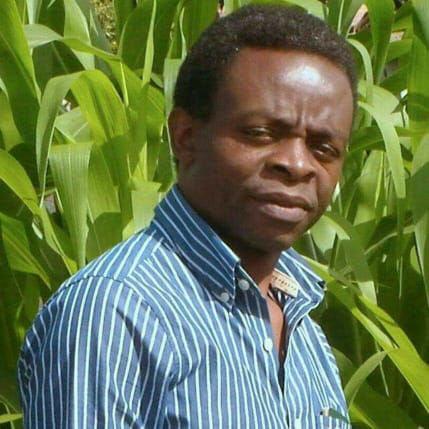

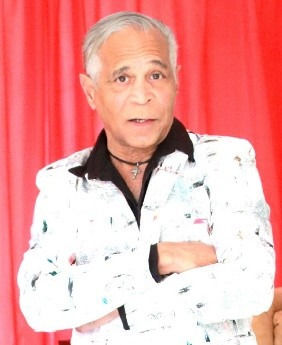
From Left to right : Elfas Mcloud Zadzagomo Shangwa, Executive President & Founder (Hunter's Global Network & FPI), Kevin Wilson, CEO & Deputy President (FPI). Donald Pilai COO & Deputy President (Hunter's Global Network)

A NOTE FROM THE FOUNDER OF FPI:
Leadership is a Collective Social Process:
I firmly believe that leadership is not a solo endeavor. True leadership is built on collaboration, shared responsibility, and continuous exchange between individuals working toward a common purpose. Leadership, therefore, is not about individual prominence, but about collective progress, shared ownership, and sustainable transformation.
I define leadership as a social process that enables individuals to work together as a cohesive group to produce collective results. This definition recognizes leadership as dynamic, interactive, and relational — rather than hierarchical and individualistic.
Leadership emerges in the interactions, relationships, and shared responsibilities among people committed to common goals. It is within these interactions that vision is strengthened, decisions are improved, and sustainable progress is achieved. Leadership, in this sense, becomes a collective responsibility, where success is measured not by individual recognition but by shared achievement and long-term impact.
Within any effective group, diverse skills, experiences, perspectives, and expertise converge to create outcomes far greater than what any individual could achieve alone. This diversity strengthens decision-making, promotes innovation, and enhances resilience. Individual weaknesses are naturally balanced by the strengths of others, allowing the entire team to thrive and perform at a higher level.
The most effective leaders understand that sharing power strengthens leadership rather than weakens it. They do not fear being overshadowed or displaced. Instead, they empower others, nurture talent, and promote collaboration. These leaders recognize that when individuals are empowered, the entire organization becomes stronger, more innovative, and more capable of achieving its goals.
Such leaders create environments where individuals feel valued, heard, and motivated to contribute meaningfully. In these environments, leadership becomes distributed, innovation becomes continuous, and performance becomes collective.
Leadership, in its truest and most impactful form, is therefore not about personal achievement, but about inspiring and enabling a group to reach its full potential together.
Leadership as the Foundation of RUAIPP and Agriculture-Based Clusters (ABCs):
It is from this leadership philosophy that I developed Rural and Urban Agriculture Innovative Production Program (RUAIPP) and Agriculture-Based Clusters (ABCs).
These initiatives were not created as standalone agricultural programs, but as structured leadership and development frameworks designed to bring people together, build collaboration, and create sustainable agricultural transformation.
Through RUAIPP, the focus is on inclusive participation, bringing together:
-
Rural farmers
-
Urban farmers
-
Youth
-
Women
-
Investors
-
Institutions
-
Government
-
Development partners
RUAIPP is therefore a social leadership platform that mobilizes communities and institutions to work collectively toward agricultural productivity, food security, and economic empowerment.
The Agriculture-Based Clusters (ABCs) were developed as implementation mechanisms under this
leadership philosophy. ABCs operationalize collaboration by bringing together:
-
Farmers
-
Input suppliers
-
Financial institutions
-
Processing companies
-
Logistics providers
-
Export companies
-
Training institutions
-
Government agencies
Through Agriculture-Based Clusters, agriculture moves from fragmented individual efforts to structured collective production systems.
This approach strengthens:
-
Production capacity
-
Market access
-
Financing opportunities
-
Value addition
-
Export readiness
-
Industrial agriculture development
These frameworks ensure that agriculture is no longer approached as isolated activities but as integrated economic ecosystems.
Building Accountability and Transparency Through Social Leadership:
I have embraced social leadership processes to build strong foundations of accountability, transparency, and inclusivity in our work. With robust social structures in place, we are empowered to implement and govern systems effectively from the grassroots level upward.
These structures serve as the backbone for:
-
Policy development
-
Project execution
-
Monitoring and evaluation
-
Governance systems
-
Investment mobilization
-
Stakeholder coordination
By establishing these frameworks, we ensure that development is community-driven, participatory, and sustainable.
The RUAIPP and ABC frameworks are therefore not only agricultural models — they are leadership and governance systems designed to drive transformation at scale.
Collaboration at the Heart of Agrifood Transformation
Our agrifood production strategies are built on collaboration and shared responsibility. Agriculture transformation requires the involvement of:
-
Farmers
-
Financial institutions
-
Government agencies
-
Research institutions
-
Private sector partners
-
Development organizations
Through RUAIPP and ABCs, these stakeholders are brought together under one coordinated framework.
This collaboration enables:
-
Large-scale production
-
Improved efficiency
-
Reduced production costs
-
Value chain development
-
Export competitiveness
Teamwork remains at the heart of our approach, guiding the implementation of agrifood production strategies and ensuring their success.
Leadership Inspired by Wisdom and Strategic Governance
This leadership philosophy is also grounded in wisdom, structured governance, and strategic collaboration, principles demonstrated by biblical strategists and transformational leaders.
Examples include:
-
Moses, who established structured leadership through delegation
-
Nehemiah, who mobilized communities for collective rebuilding
-
Joseph, who implemented structured agricultural planning and food security systems
These examples demonstrate that transformational leadership is collective, structured, and inclusive.
Leadership for National and Continental Transformation:
Through RUAIPP and Agriculture-Based Clusters (ABCs), we are building:
-
Inclusive agricultural economies
-
Community-based production systems
-
Rural industrialization
-
Agrifood value chains
-
Export-driven agriculture
-
Sustainable livelihoods
This leadership approach transforms agriculture into:
-
An economic driver
-
A job creation platform
-
A rural development strategy
-
A national transformation model
Conclusion
Leadership, therefore, is not about control — it is about empowerment.
It is not about authority — it is about service.
It is not about individual success — it is about collective transformation.
It is this leadership philosophy that led to the development of:
-
Rural and Urban Agriculture Innovative Production Program (RUAIPP)
-
Agriculture-Based Clusters (ABCs)
-
Inclusive agrifood production systems
-
Community-driven agricultural transformation
These frameworks represent collective leadership in action, designed to unlock the potential of individuals, communities, and nations.
This is not just leadership.
This is transformational leadership for agricultural and economic revolution.
I thank you for joining us as part of Farmer's Pride International. Together, we have much to learn from one another as we continue to build this institution. My leadership model is deeply influenced by the biblical examples of Nehemiah and Jethro, who exemplify vision, strategy, and servant leadership: Nehemiah and Jethro
(Elfas Mcloud Zadzagomo Shangwa (HUNTER) Executive President and Founder of Hunter's Global Network & FPI)

Value-Based Leadership:
FPI-I practices value-based leadership, a combination of elements similar to participatory leadership strategies, the difference being that it's a value-based leadership approach is built into the design, management, and often the branding of its agri-business. This kind of leadership approach depends on strong relationships, mutual trust and respect, participation by all, accountability by all, investment by all, strong communication, and an environment that encourages and promotes these principles. By getting everyone involved, and understanding the day-to-day realities of all members of the organization, leads to improved processes, new insights, untapped opportunities, and overall positive organizational transformation.
The success of FPI-I cluster projects depends on the human and social capital that make up the links in the operational chain—people, networks, and the quality of interconnecting relationships and linkages. Successful leaders from businesses affiliated with FPI-I agree upon values, desirable outcomes, and measures and can speak with one voice about them. Communicating with employees and people at all levels ensures there is a common vision and messaging across the chain. Leaders must be embedded in and committed to the process and parts and must be brokers for both business interests and other negotiated, shared social and environmental goals.
Our practice of inclusive governance has a competitive market advantage in that broad-based involvement provides ample feedback within the system to inform and guide the business through periods of intense change. Yet, inclusive participatory governance can also come at the expense of business efficiency and nimbleness. FPI-I leaders must be vigilant to protect against this potential drag on the system and carefully weigh potential tradeoffs between efficiency and inclusiveness.
FPI Leadership Structures and their Functions:
1) International Executive Council (IEC);
2) International General Council (IGC);
3) International Executives (IE);
4) Regional Councillors (RCs) ;
5) National Executive and community structures led by coordinators and farming communities, many of them volunteers.
International Policymaking Structures:
The structure is led by the FPI Presidium & and the (Founding Member)
The office’s duties are in Operations Administration management (OA) it manages the policy development and implementation processes, project activity tools, and standards involved with operating, administering, managing, and maintaining any program and activity systems in FPI.
The policy-development office works with all policymaking structures across the world, including continental leadership under the 7 Vice Presidents, Regional leadership under the International General Council, and regional councillors.
The International General Council is led by Continental Vice Presidents and their regional leadership structures.
Working together with these structures we become the Chief Policymakers of the FPI, we work to make the organization functional and attractive to donors and funders and to work in harmony with different host governments across the world. These structures stand as FPI project monitoring systems, from grassroots, regional, continental, and international.
International Project implementation and management structures:
This structure is led by the International Executive, which falls under the leadership of the CEO a renowned economist who is the leader of the organization's day-to-day activities and leads FPI sitting on both the IEC and the IGC, not as a policymaker but as its ex-officio, the CEO is the ley leader of FPI, besides leading FPI project he also influences policy-making processes and policy adoption as he is the one who shapes the FPI activities through his day to day leadership of the organization.
The CEO is deputized by many deputies from different levels who have different functions at the regional and international levels. First amongst the leadership are the following officials:
-
The Office of the Finance Controller (Fin-Co) Internal Auditor, or Compliance Executive, is a very crucial office that carries the responsibility for the setting up of financial policies, implementation, auditing, recruitment of finance admin staff, as well as managing FPI finances at the community, national, regional, and international levels, continental, regional, and national levels. This office also sets up, works, and monitors fundraising and marketing teams.
-
The office of the Senior Executive Director, who is responsible for capacity building, is an important office responsible for shaping our leadership into what we expect to get out of them, starting from starting branches, setting up of structures, management, and operations.
-
The office of the Senior Executive Director is responsible for the agroecology project, this office has several sub-offices attached to it in line with several activities under the agroecology project.
-
The office of the Executive Director is responsible for membership and the Microfinance Credit Scheme; this office is held by a person with both financial and administrative skills and a good track record in handling and managing people and money. They are responsible for recruitment, data management, and running self-help microfinance credit schemes.
-
The office of the Executive Director, responsible for Monitoring and Evaluation, looks at the input-transformation-output processes and enables a search for efficiency and optimization by rearranging or changing the processes ( Deliverables on all our activities)
-
Executive Director responsible for the Integration of technology into Agriculture, This office integrates effective knowledge management strategies, incorporating the producer's knowledge and responding to the technology user's needs.
With the above structures at the international level, FPI is going far and will win on
all its projects.
FPI Governance is composed of 6 constitutional governance structures, namely:
The International Executive Council (IEC):
This is the FPI’s highest International Governing body, currently led by the Executive President and founder of the FPI, composed of 6 officials: the Executive President, the Deputy Executive President, the Chief Executive, an advisor to the President, and 3 other Executive Members.
The governance body is responsible for the approval of projects and policies agreed upon by the International General Council (IGC). The body meets 3 times each year physically but holds several online sittings to approve and deliberate on matters arising from the organization's operations; this Executive arm of the FPI meets with all governance bodies at regular intervals.
The International Executive or the (International Secretariat) :
The international Executive is the FPI Secretariat, a body that is led by the Chief Executive Officer who is deputized by several Senior Executive Directors. These two are the most important individuals in FPI as they are the leaders of the organization and who give strategic direction at the international level, this body runs and operates FPI on a daily basis and consists of different program officials, working at the FPI HQ and as well as Continental and regional offices, it recruits membership and employees makes program decisions and implements agreed on activities across the world working with country chapters in consultation with the IGC structures and the approval of the IEC, the International executive meets with the IEC on several occasions both virtually and in person.
FPI Leadership Model
It is a global governing body comprised of seven Vice Presidents, each representing a different continent. These Vice Presidents serve a term of three years and are eligible for re-election. The Vice Presidents rotate the position of IGC Chairperson annually, with each serving as Chair for a 12-month period. As a result, the leadership of the IGC rotates across continents every year.
Supporting the Vice Presidents are regional chairpersons, one of whom is elected as the Executive Chairperson. The Executive Chairperson serves as the deputy to the Continental Vice President and assumes their role in the Vice President's absence. These chairpersons are elected by the six representatives from each country branch, who convene every three years at the International General Assembly. The six members are: the Country Board Chairperson, their Deputy, the Treasurer, the Country Director, the Deputy Country Director, and the Senior Program Officer.
The Continental Vice Presidents report directly to the International Executive Council (IEC), while the regional teams report to the respective Continental Vice Presidents. These leaders meet with the IEC every four years during the International General Assembly, and with their committees three to four times per year to monitor and evaluate existing policies and projects. Additionally, they are responsible for proposing new policies to be considered by the IEC.
Continental Councillors:
Continental Board members are elected representatives who serve on the Continental Council, representing their respective regions. From this group, five regional Chairpersons are selected, each responsible for overseeing one of the five continents globally. These Chairpersons report directly to the IGC and are tasked with leading the monitoring and evaluation of FPI activities, ensuring effective policy implementation, and facilitating the election of senior councillors for their regions.
Each country is represented by two Country Board members and two Country Executive members on the Continental Council, serving a three-year term. These representatives report to their respective Continental Executive Chairperson, who in turn reports to the Vice President of the continent.
The Executive Chairpersons, along with the Country Councillors, are inducted into sub-committees specific to their continent and region. These sub-committees are responsible for carrying out a variety of duties and functions within their regions, and they are tasked with reporting their activities and progress to the IGC Chairperson.
These teams meet twice yearly in a designated country and once every month virtually to report and discuss projects and challenges in their regions.
The International General Council (IGC):
Continental Council
Regional Councillors:
Regional Councillors: These are 6 member teams from each country composed of the following country leadership: Country Board Chairperson, Deputy and Treasurer, Country Director, Deputy Country Director, and Senior Program Officer and are led by the Regional Chairperson and Executive Director, both of whom coordinate FPI activities in their region.
They report to the regional chairperson, who in turn reports to the continental Executive Chairperson.
These teams meet once every 3 months in their region for monitoring of projects as well as planning and implementation of policies from the Continental Council, they also meet once every month virtually for reviews and report back on progress and challenges in their countries.
STAGES OF ENGAGEMENT WITH FPI
Please read the information below to get an understanding of the stages to be followed when setting up a Farmers Pride International branch/chapter
STAGES OF ENGAGEMENT WITH FPI
Please read the information below to get an understanding of the stages to be followed when setting up a Farmers Pride International branch/chapter
FPI-I National Structures:
Country -Board / Shareholders
-
Patron (1)
-
Board Chairperson (1)
-
Deputy Chairperson (1)
-
Secretary (1)
-
Vice secretary (1)
-
Treasurer (1)
-
Board committee members (7)
Country Secretariat
-
Country Director
-
Deputy Country Director
-
National Coordinators
-
Deputy National Coordinator
-
Finance & Admin Officer
-
Human Resources
-
Legal Officer
-
Communications Officer
-
Senior Program officer
-
Crop Protection Extension Officers
-
Provincial Coordinators
-
District / County Coordinators
-
Village Coordinator
-
Ward Coordinator
-
Area Coordinators
-
Cluster Coordinators
-
Community Cluster leaders
-
Cluster members &
-
Country Membership Read more>>>