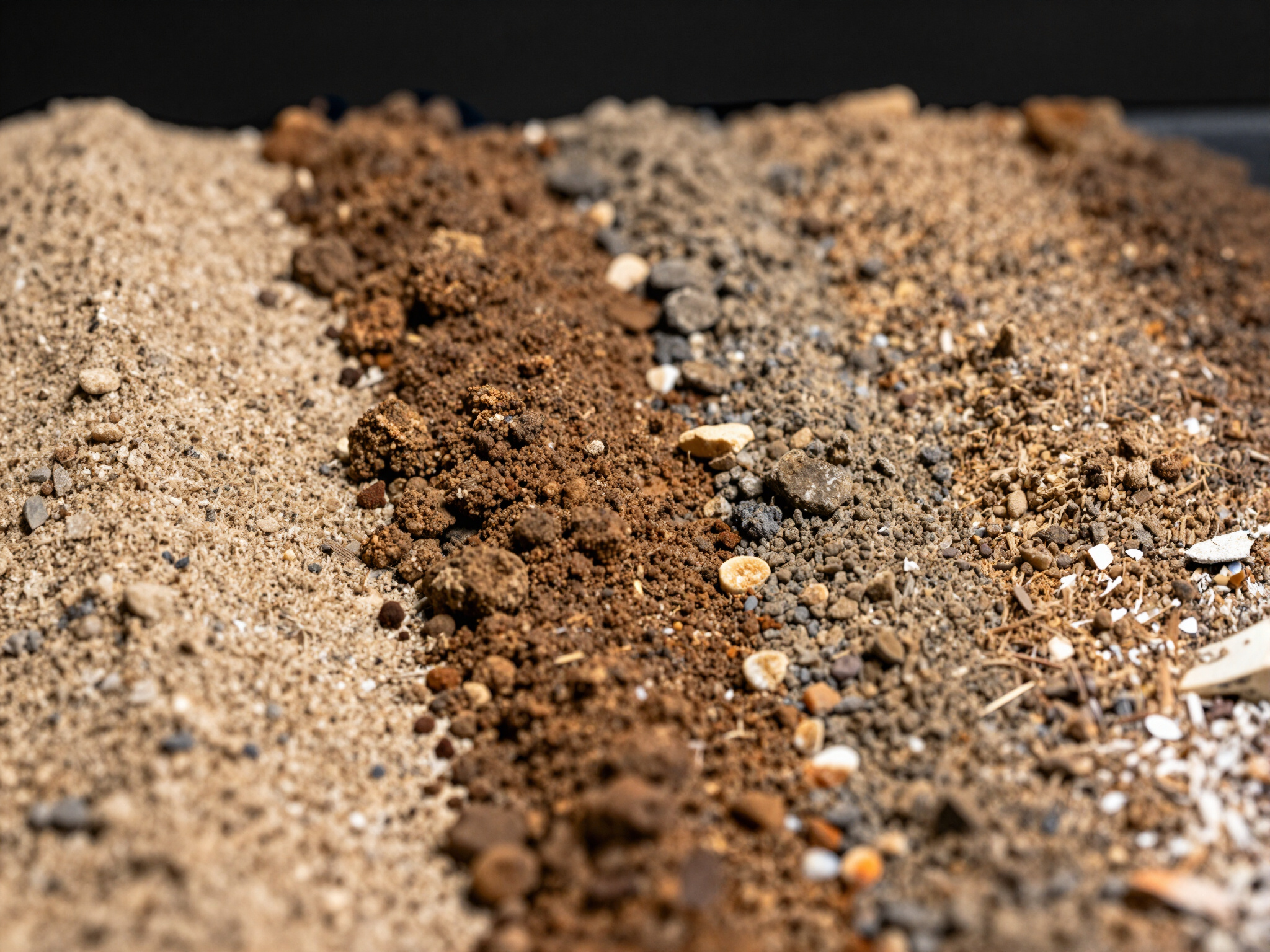
SOIL TAXONOMY & CLASSIFICATION

ARENOSOLS | SANDY SOIL
- High hydraulic conductivity
- Minimal Cation Exchange Capacity
- Siliceous mineral origins

VERTISOLS | CLAY SOIL
- Maximum water retention index
- High mineral sequestration
- Crystalline lattice density

PHAEozems | LOAMY SOIL
- Optimized textural equilibrium
- High bio-active humic matter
- Balanced aerobic dynamics

FLUVISOLS | SILT SOIL
- Granular capillary retention
- Superior alluvial fertility profile
- Hydro-compaction susceptibility

HISTOSOLS | PEATY SOIL
- High-carbon organic matrix
- Pronounced acidic pH signatures
- Managed anoxic environments

LEPTOSOLS | CHALKY SOIL
- CaCO3 alkalinity profiles
- Fragmented lithology character
- Rapid percolation and leaching
Ion Exchange & Redox Dynamics
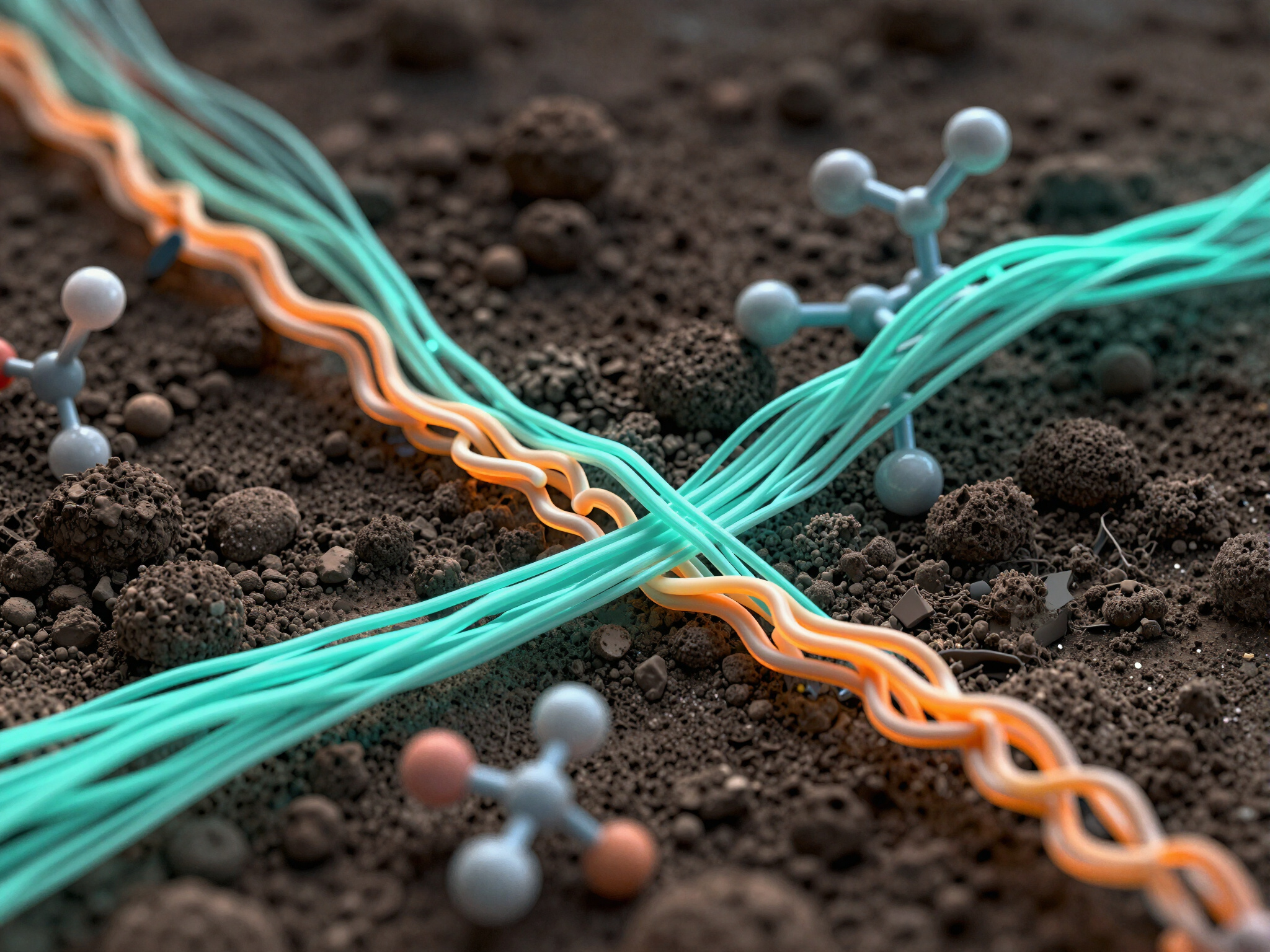
Soil chemical composition dictates mineral bioavailability and nutrient acquisition efficiency. Our analysis integrates Cation Exchange Capacity (CEC) with complex electrochemical interactions between clay surfaces, organic ligands, and the aqueous soil solution matrix.
Organic Matter Synergy
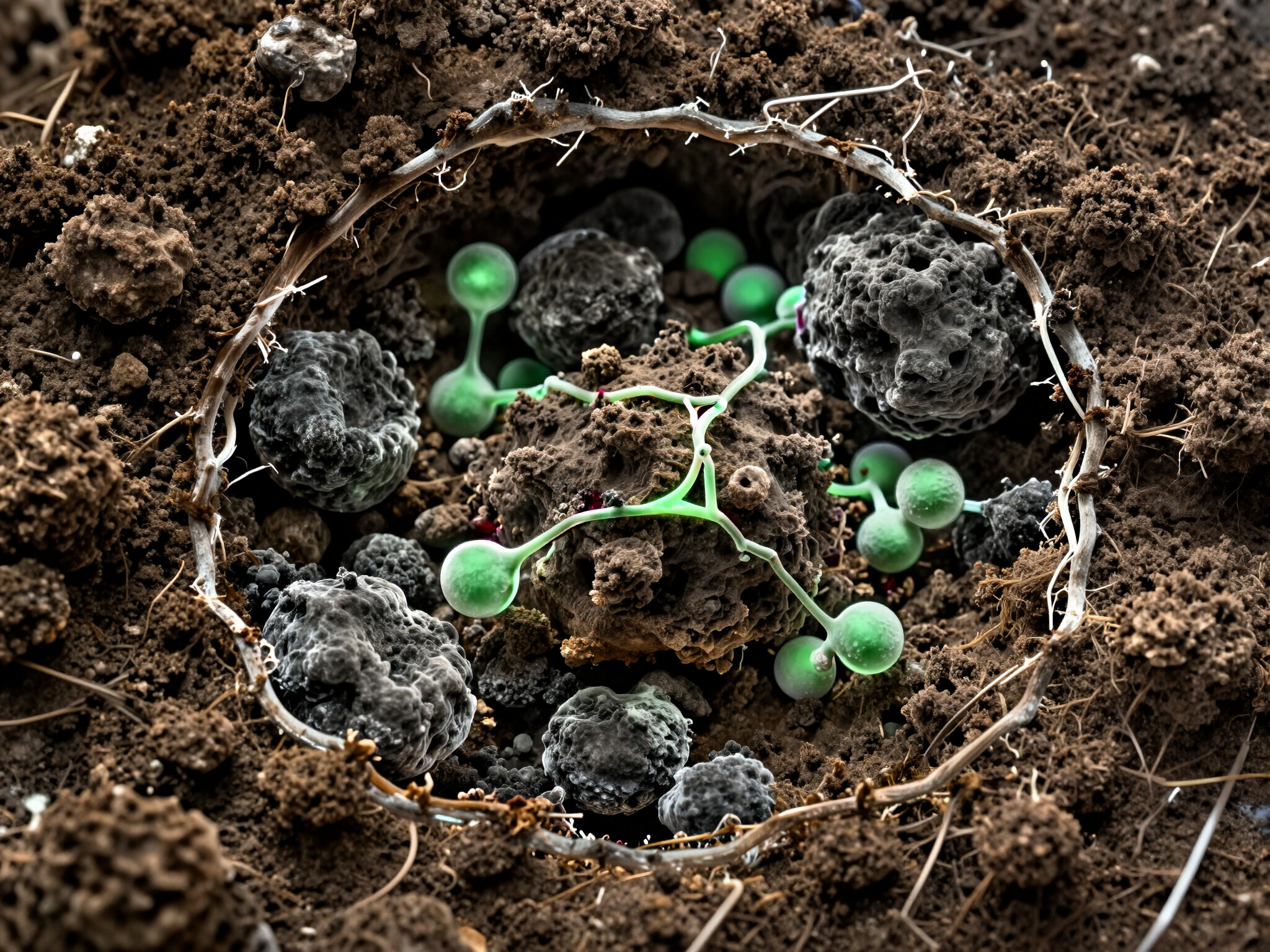
Humic and fulvic acids facilitate chelation, stabilizing essential micronutrients and improving soil aggregates through biological bonding agents.
Cation Exchange
Quantifying the retention of positive ions (Ca²⁺, Mg²⁺, K⁺) provides a critical metric for geochemical buffer capacity and long-term yield potential.
Buffering Capacity
Resistance to pH shifts is driven by mineral weathering and carbon sequestration, preserving enzymatic pathways and microbial ecosystem health.
Valency Science
Oxidation-reduction status governs the valency of Iron and Manganese, impacting aeration corridors and the mobility of prospective toxins.

pH Calibration Tiers
pH Range < 6.0
Acidic Phase
Pedological acidity significantly alters bioavailability, limiting phosphorus mineralization while escalating aluminum-induced phytotoxicity. Management protocols prioritize precise calcium carbonate titration and organic buffering.
- CaCO3 Injection Calibration
- Magnesium Homeostasis
- Al-Saturation Monitoring
pH Range 6.0–7.5
Neutral Dynamics
The optimal biosynthetic window facilitating maximum enzymatic throughput. This window stabilizes nitrogenase activity and enhances Cation Exchange Capacity (CEC), ensuring peak biomass metabolism.
- CEC Optimization Matrix
- Microbial Loop Maintenance
- High-Efficiency Nutrient Flux
pH Range > 7.5
Alkaline Flux
Extended alkalinity induces micronutrient immobilization, primarily affecting Iron and Manganese solubility. Interventions leverage elemental sulfur oxidation and high-precision acid-buffered fertigation.
- Redox Potential Tuning
- Acidifying Fertigation
- Micro-Nutrient Chelation